
Forklift Operator – A Complete Career Guide for Job Seekers
In today’s fast-paced and ever-evolving job market, the role of a forklift operator stands out as both crucial and rewarding. With the global material handling equipment market projected to reach $55 billion by 2025, forklift operators are essential players in industries spanning warehousing, manufacturing, and construction. These skilled professionals ensure that goods are moved efficiently and safely, playing a pivotal role in the supply chain and logistics processes.
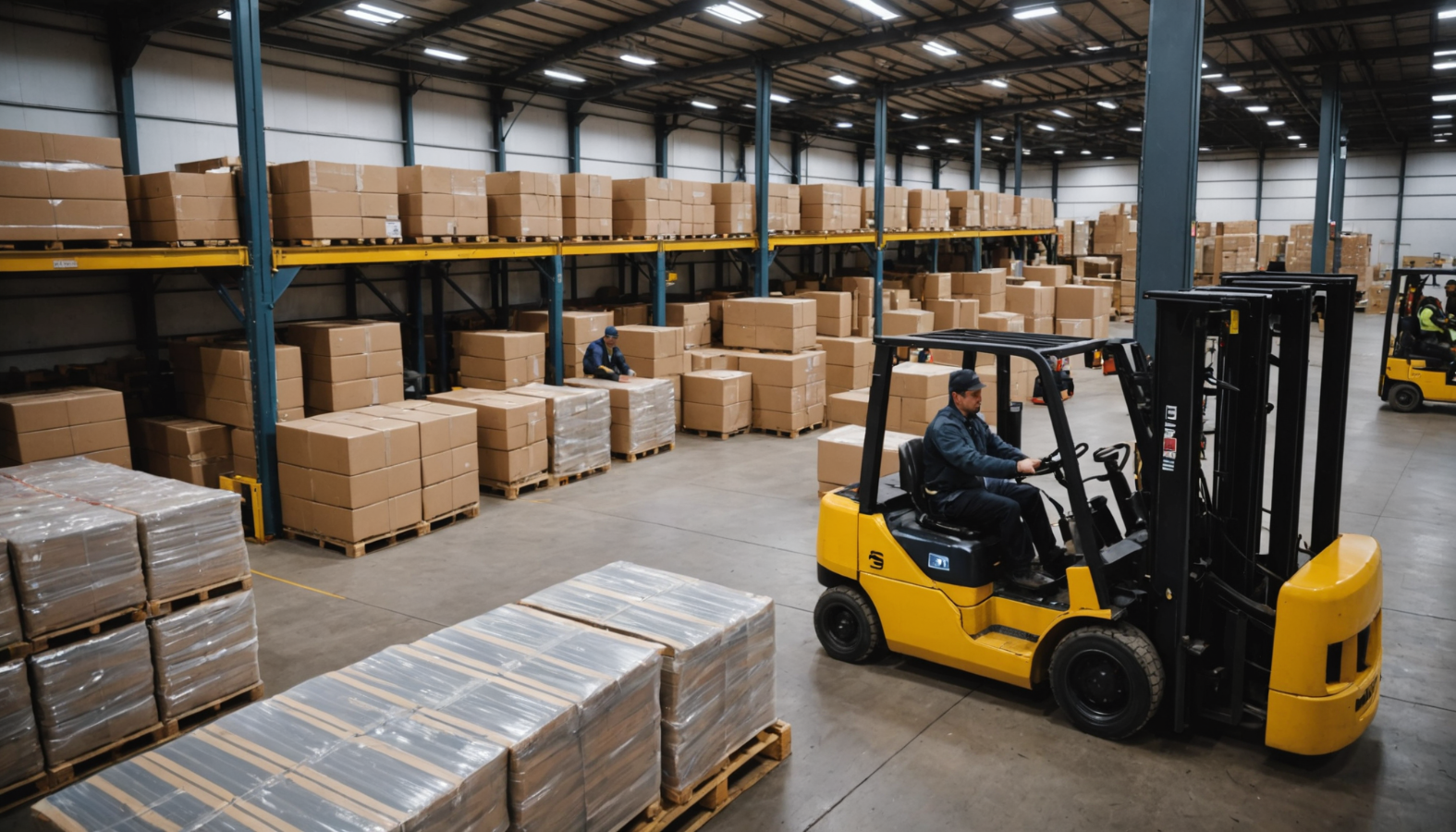
Imagine the hustle and bustle of a large warehouse—pallets of products stacked high, freight containers being unloaded, and production lines relying on the swift transportation of materials. Without qualified forklift operators, this intricate dance of logistics would come to a standstill. According to the Bureau of Labor Statistics, there are currently over 600,000 forklift operators in the United States, highlighting the demand for this vital workforce.
◆ Why Choose a Forklift Operator Career?
✅ High demand across industries – Warehouses, factories, construction sites, and shipping yards all need skilled operators.
💰 Competitive pay with certification bonuses – A forklift certification ($60-150, 4-8 hours) can add $3-5 per hour to your wage.
📈 Growth opportunities – Entry-level positions can lead to supervisor roles, inventory management, or logistics coordination.
⏰ Flexible shifts available – Many employers offer day, night, and weekend schedules to suit your lifestyle.
◆ What Does a Forklift Operator Do?
A forklift operator is responsible for safely moving materials in warehouses, factories, and shipping areas. Core duties include:
🏗️ Material Handling
- Load, unload, move, stack, and stage products using various types of forklifts (sit-down, stand-up, reach truck, order picker, clamp truck)
- Transport goods to designated storage areas
- Assist with shipping, receiving, and inventory management
🔧 Safety & Equipment Maintenance
- Conduct daily pre-operation checks (oil, fuel, brakes, etc.)
- Report mechanical issues immediately
- Comply with OSHA (or local) safety regulations
📦 Order Fulfillment
- Pull and prepare products for shipment with exact quantity accuracy
- Verify load count, stability, and product condition
- Keep appropriate records and reports for inventory accuracy
◆ Key Skills Employers Look For
🛠️ Technical Skills
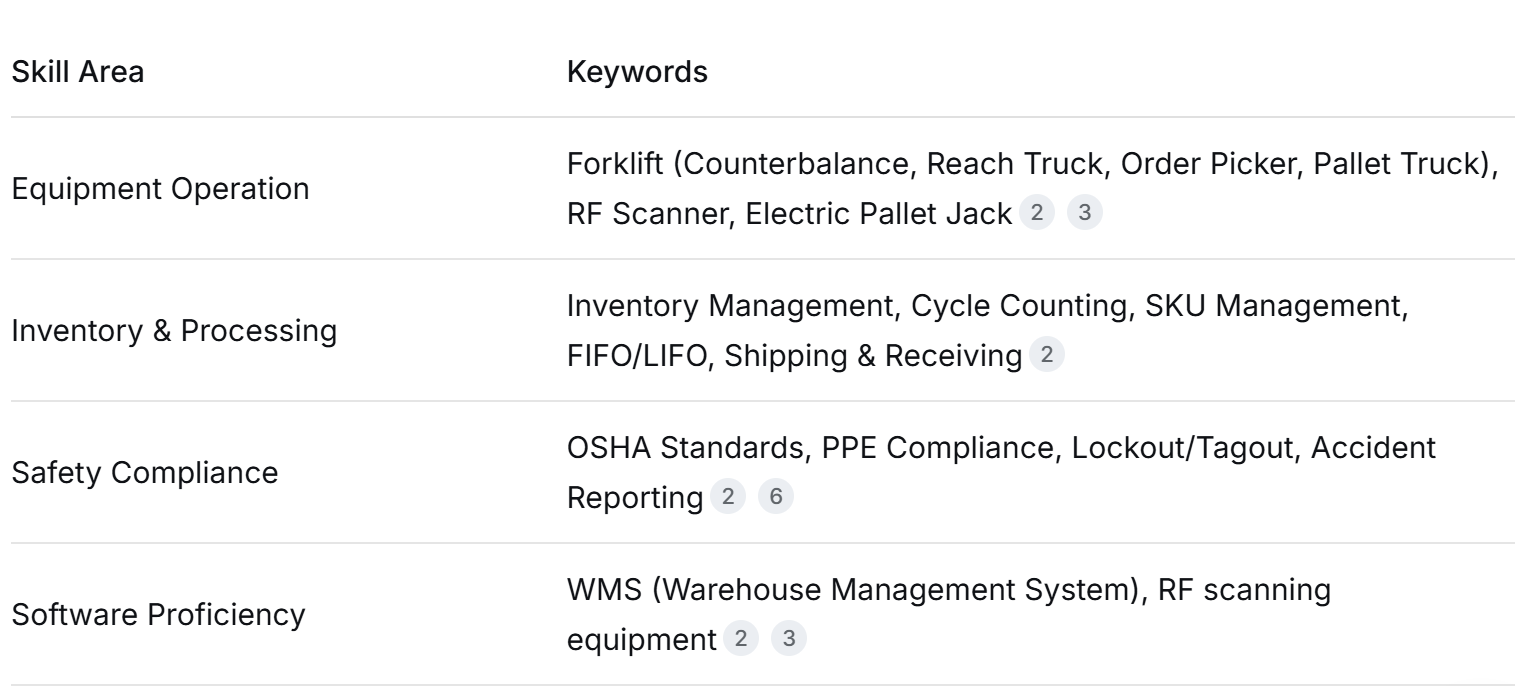
💪 Physical & Soft Skills
- Strength and stamina for lifting and moving heavy materials
- Good hand-eye coordination and spatial awareness
- Attention to detail – to prevent damage and accidents
- Reliability and punctuality – highly valued by employers
- Teamwork and communication skills
📜 Certifications (Often Required)
- OSHA forklift certification (or country-specific equivalent)
- Some employers offer on-the-job training within the first 30 days
- High school diploma or GED preferred but not always required
◆ How to Write a Forklift Operator Resume That Gets You Hired
🎯 Top Resume Keywords for 2026
Include these keywords to pass automated screening systems (ATS)
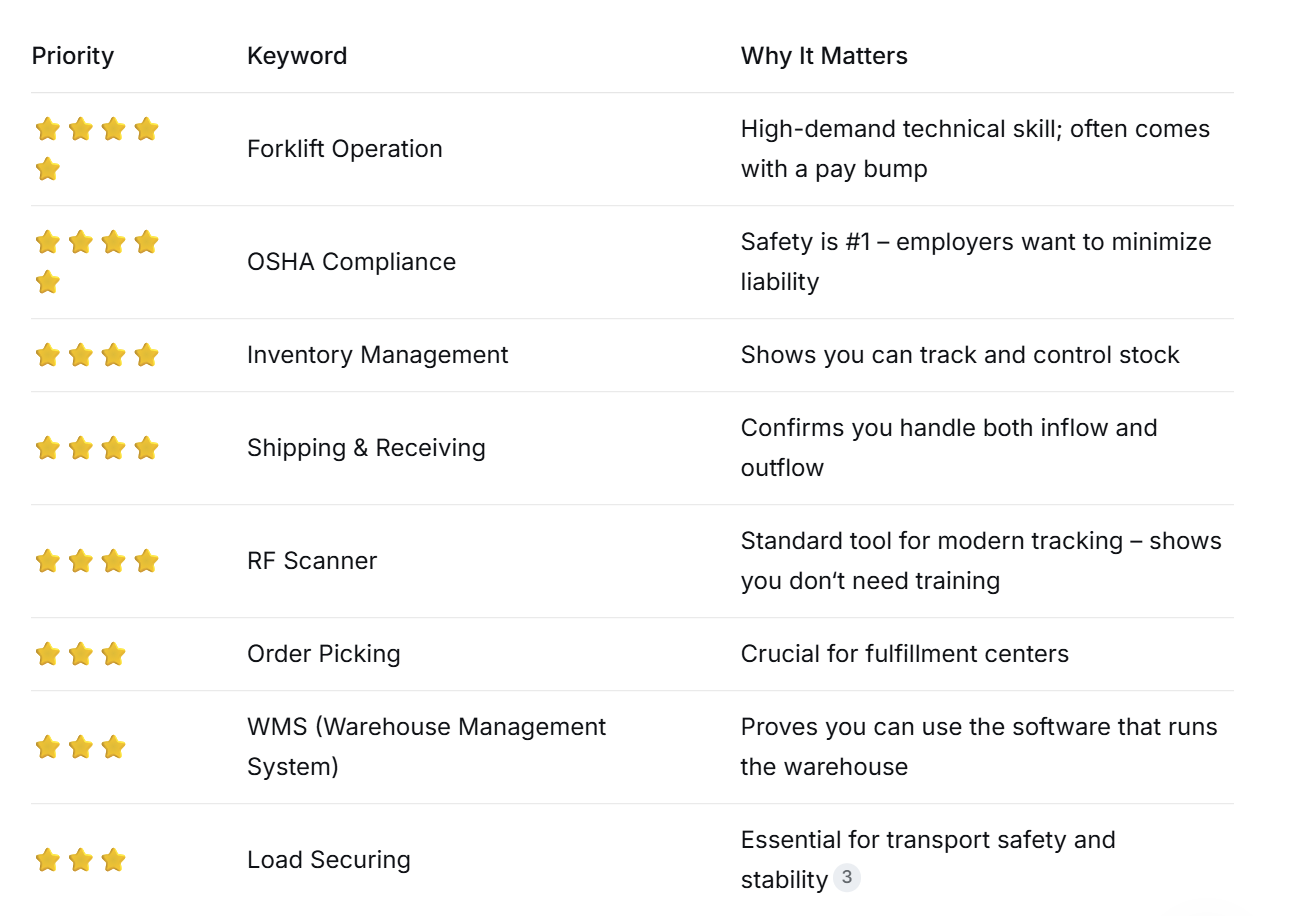
💡 Pro Tip:Include at least 5-7 of these keywords (where truthful) to pass resume screening. Use specific language like “Used RF handheld scanners to pick orders at 98% accuracy” rather than vague statements
◆ Forklift Operator Job Requirements by Experience Level
Entry-Level (0-1 Year Experience)
- Valid forklift certification or willingness to obtain within 30 days
- Physical stamina for standing and lifting
- Basic understanding of warehouse safety
- Keywords to emphasize:Fast Learner, Dependable, Overtime Availability, Eager to Obtain Certification
Experienced (1-3+ Years)
- Proven forklift operation experience (sit-down, stand-up, reach truck)
- Familiarity with WMS and RF scanning systems
- Strong safety record and OSHA knowledge
- Inventory management and shipping/receiving experience
◆ Frequently Asked Questions (FAQ)
Q. How much does forklift certification cost and how long does it take?
A. Certification typically costs $60-150 and takes 4-8 hours to complete. Many employers reimburse the cost or provide in-house training.
Q. Do I need prior experience to get hired as a forklift operator?
A. Not necessarily. Many companies hire entry-level candidates and provide training within the first 30 days. Highlight your willingness to learn, reliability, and physical readiness.
Q. What types of forklifts should I know how to operate?
A. Common types include sit-down forklifts, stand-up reach trucks, order pickers, pallet trucks, and clamp forklifts. Employers often list specific types in job postings.
Q. How can I improve my chances of getting hired quickly?
A. Include the right keywords on your resume, obtain your certification in advance, emphasize safety compliance, and be flexible with shift availability.
Q. Is forklift operation a safe job?
A. Yes – when proper safety protocols are followed. Employers prioritize OSHA compliance, daily equipment inspections, and ongoing safety training to minimize risks.
Forklift operation offers a stable and accessible career path with competitive pay and growth opportunities. Whether you‘re entering the workforce or looking for a change, the demand for qualified operators continues to grow across logistics, manufacturing, and retail industries.
This guide provides general career information. Always check specific job requirements and local regulations before applying. For the most current hiring information, consult official job listings and employment resources.